Range Repair
Viking Burner Clicks and Clicks Before It Lights
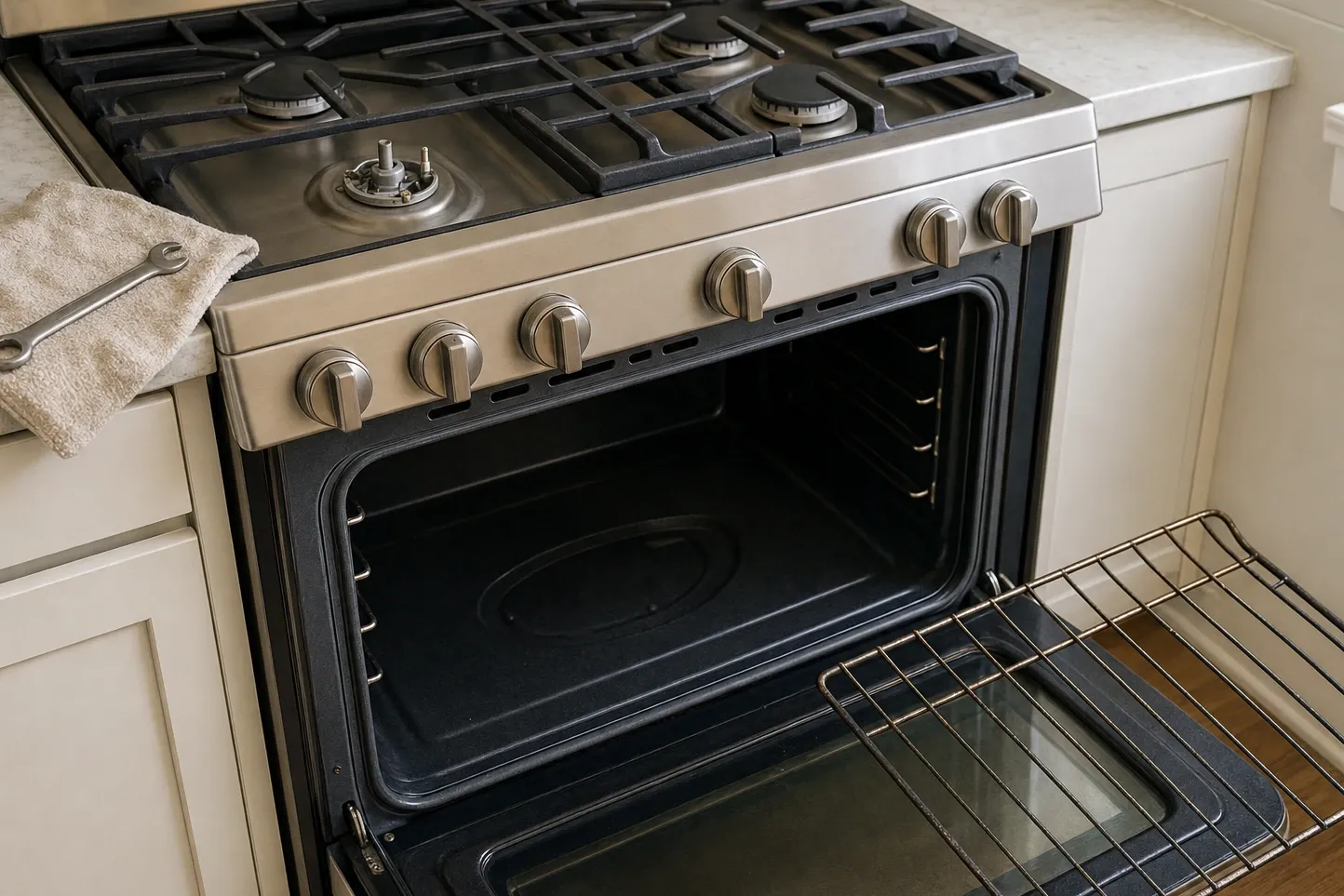
A Viking burner that fires on the first click for years and then starts ticking four, six, ten times before the flame arrives has not become unreliable at random. Delayed ignition is one of the most readable faults on a gas range, because the clicking itself is a running commentary on what is wrong.
What the clicking actually is
The click is a spark jumping from an electrode to the burner cap, roughly forty times a minute, while the valve is open. When ignition is instant, the spark lands in a fuel-air mixture that is already at the right ratio. Every extra second of clicking means the mixture at the electrode is not lighting — either because it is too lean, too rich, or because the spark is not landing where the gas is.
That gives three families of cause, and they are not equally likely:
- the spark is weak or landing badly — a fouled or cracked electrode, a ceramic insulator wet with cleaning water, or a gap that has opened up
- the gas is arriving unevenly — ports blocked with carbon and boil-over so the flame cannot travel around the ring
- the mixture is being disturbed — an extraction hood pulling hard over an open burner, or a cap seated slightly off its locating pins
A failing spark module is real but sits fourth on that list, and it usually announces itself differently: every burner clicking faintly, or clicking that carries on after the flame is up.
Why this city makes it worse than the brochure suggests
Two things about cooking in Los Angeles show up in this fault repeatedly.
The first is the hood. A professional range under a high-capacity hood in a Westwood galley or a Playa Vista townhouse kitchen is competing with a fan that can move a lot of air out of a small room. On a low setting, with a window shut and the hood on high, the air at the burner is genuinely moving — and a low flame that blows itself out or refuses to catch is not a range fault at all. Crack a window and try it again before you book anything.
The second is salt air. Kitchens within reach of the beach breeze in Venice corrode faster than they should, and the parts that corrode are exactly the ones that matter here: the electrode tip, its ceramic collar, the burner cap’s underside and the port rims. It happens slowly enough that most people assume the range has developed an electronic fault, when the truth is a millimetre of white crust in the wrong place.
What to check before anyone comes out
Do all of this with the range cold and the knobs off.
- Lift the grate and the cap. Look at the burner head. Ports should be open, evenly spaced holes. Carbon, sugar from a boil-over and old oil all block them, and a blocked ring lights on one side and travels slowly.
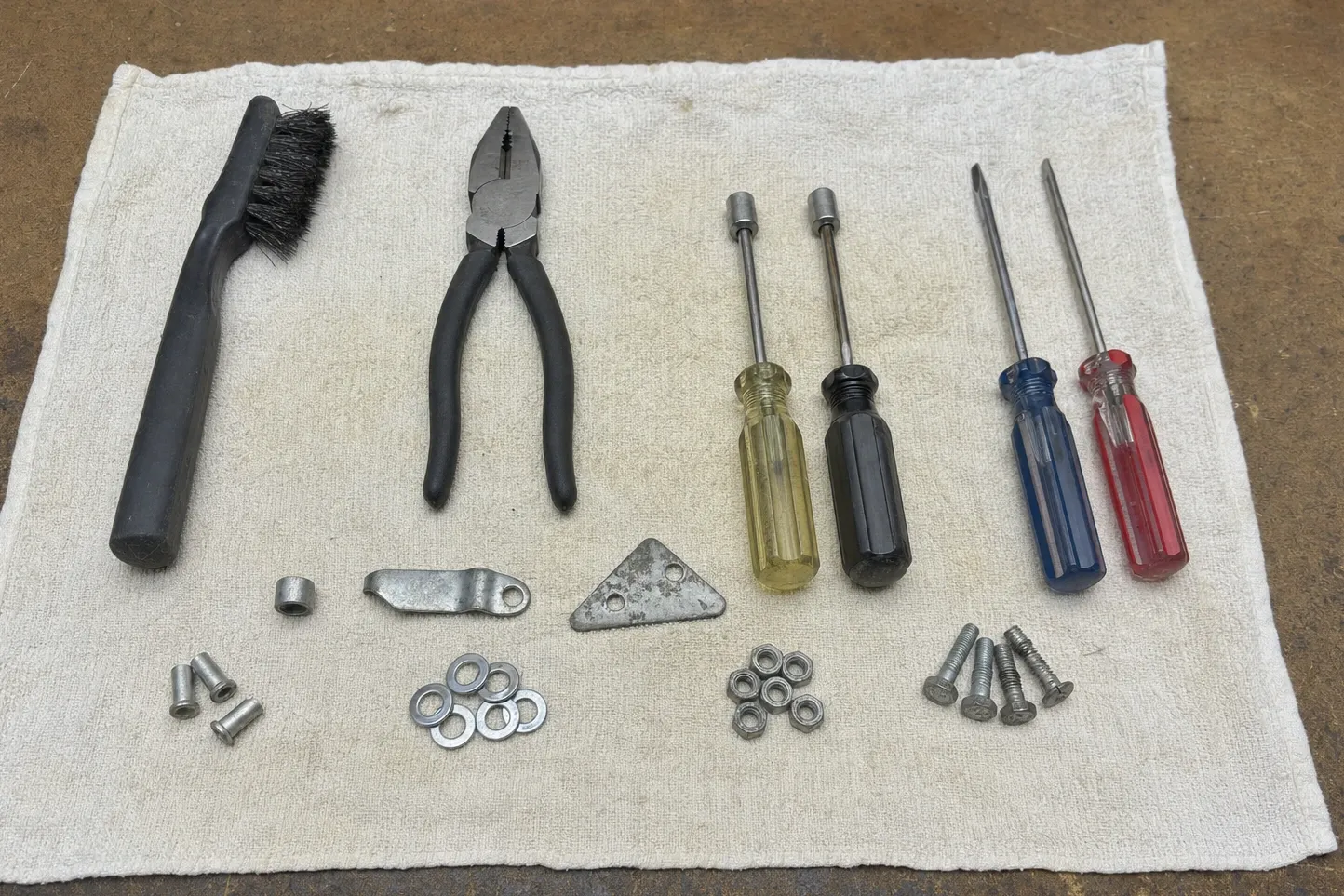
- Clean the ports properly. A stiff brush and a straightened paperclip, not a toothpick that can snap off inside. Do not enlarge a port with a drill bit.
- Look at the electrode. It is the small ceramic-sleeved pin at the edge of the burner. It should be dry, unbroken and clean. A hairline crack in that ceramic leaks spark to earth and produces exactly this symptom.
- Dry everything. If the range was recently cleaned, water in the electrode well will cause days of clicking. Leave the caps off overnight.
- Reseat the cap squarely on its locating pins. A cap sitting a fraction proud changes where the gas meets the spark.
- Test the same burner with the hood off. If it lights instantly with the fan off and hesitates with the fan on high, the room is the problem.
If the delay disappears, that was it. If it is unchanged after a clean and a dry-out, stop there — the remaining causes are inside the range.
When it is the module and not the burner
The spark module is the box that generates the high-voltage pulses, and it fails in recognisable patterns rather than gracefully. Clicking that continues after a burner has lit, clicking on burners you have not turned on, all burners slow at once, or a module that produces spark only when the range is cold: those are module symptoms.
Harness damage looks similar and is more common than the module itself on an older range. The igniter harness runs through the burner box, which is the hottest, greasiest part of the appliance, and after enough years of spill and steam the insulation gives up where it passes a bracket. That is a repair, not a replacement — the section gets renewed and the routing corrected so it does not happen in the same spot again.
When to stop and call
Stop if you smell gas at any point, if the light arrives with a thump instead of a whoosh, if the flame is yellow and sooting the pans, or if the delay is on every burner. Those are not clean-and-see faults.
Otherwise a delayed light is one of the better outcomes in this trade: the parts involved are small, they are still supplied for older Viking ranges, and the diagnosis is usually done inside the first fifteen minutes with the cap off and a meter on the electrode.
Follow-ups
Is a burner that clicks for ten seconds before lighting dangerous?
It is worth taking seriously. Every second of clicking is unburned gas collecting under the cap, which is why a delayed light often arrives with a soft thump. Use another burner until it is looked at, and do not leave the knob open hoping it will catch.
Will cleaning the burner fix delayed ignition on its own?
Sometimes, and it is the right first move because it costs nothing. Grease and boil-over in the ports and around the electrode are a genuine cause. If the delay survives a proper clean and a dry-out, the fault is electrical or in the gas supply and cleaning again will not change it.
Why does only one burner do it when the others are fine?
Each burner has its own electrode and its own share of the spark module's output. A single slow burner points at that burner's electrode, its gap or its ceramic. All burners clicking weakly at once points upstream at the module or its supply.